Featured Faculty
Clinical Professor of Management & Organizations; Executive Director of Kellogg's Dispute Resolution and Research Center
Riley Mann
In February 2022, WNBA star Brittney Griner was arrested at a Moscow airport with cannabis oil in her luggage. She was charged, tried, convicted, and sentenced to nine years in a penal colony. The legal process, though ordinary on the surface, was political theater. Ten months later, Griner walked free, exchanged for notorious Russian arms dealer Viktor Bout.
Griner’s case is a textbook example of hostage diplomacy. A government arrests or detains a foreign national under the guise of ordinary law enforcement, secures a conviction, and then uses the prisoner as a bargaining chip to extract concessions from the prisoner’s home country.
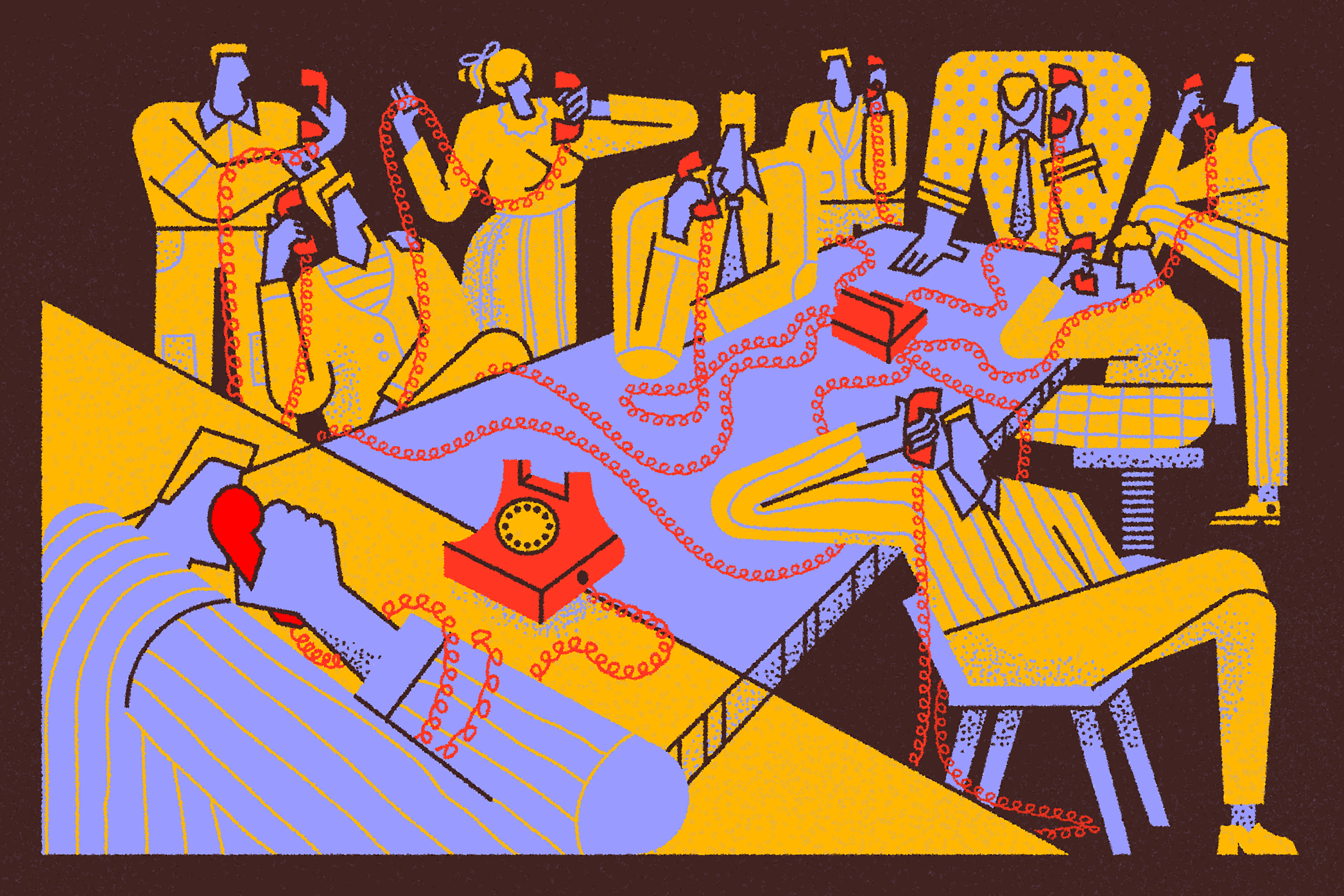
These situations are not only increasingly common but also staggeringly complex. A single case can involve adversarial diplomats, anguished families, and rival bureaucratic factions inside a single government, each with its own set of interests and definition of a good outcome.
“Still, hostage diplomacy is fundamentally a negotiation problem,” says Cynthia Wang, a clinical professor at the Kellogg School and executive director of Kellogg’s Dispute Resolution Research Center and Kellogg Teaching Resources. Together with Northwestern political scientist Danielle Gilbert, Wang developed a framework for negotiation that centers on the skill of perspective-taking—that is, viewing the world from another’s vantage point. When done properly, perspective-taking can help negotiators better manage power dynamics, help opposing parties come to an agreement, and potentially anticipate future crises.
The context of hostage diplomacy may be extreme, but the underlying structure is familiar to almost everyone who has sat at a bargaining table, whether negotiating a labor dispute or closing a merger: many stakeholders, high stakes, and the constant need to work out what the other side is thinking.
“While I was writing and thinking about this, I was regularly struck by how our findings applied to the world of management, too,” Wang says.
Perspective-taking involves sussing out other people’s thoughts, motivations, intentions, or emotions—allowing a negotiator, for example, to anticipate how others will act. Wang and Gilbert introduce an approach to perspective-taking that centers on two distinct dimensions of the technique.
The first is the practice of taking on the perspectives of multiple stakeholders at once rather than fixating on the person directly across the table. In the case of hostage diplomacy, this means negotiators would weigh not only the immediate representative of the adversary country but also that country’s leaders, the competing agencies back home, and the hostage’s family.
“Adopting a perspective based on somebody’s strategic approach to a [hostage negotiation or] business deal will lead to different conclusions than considering their emotional, cultural, or moral viewpoint.”
—
Cynthia Wang
In business, likewise, an effective dealmaker must read the counterpart’s motives along with those of their CEO, legal team, board of directors, and even prospective customers after the deal is done.
“Sure, you’re negotiating with the person across the table, but maybe that person’s decisions are being influenced by their boss or by a competitor,” Wang says. “Or, similarly, I’ve been in negotiations where I arrived at a deal that I wanted to strike, but it was very different than the deal my bosses wanted. We need to be mindful of bringing in these different perspectives.”
The second dimension concerns the type of perspective people take. Wang and Gilbert identify four psychologically distinct types of perspective-taking:
Teasing apart these four types of perspective-taking is, according to the researchers, the central contribution of their framework.
“Adopting a perspective based on somebody’s strategic approach to a [hostage negotiation or] business deal will lead to different conclusions than considering their emotional, cultural, or moral viewpoint,” Wang says. “Each of these perspectives will have a distinct effect on the way we approach a negotiation.”
The cultural component has become especially critical given how many negotiations today cross cultural lines. Russia, for instance, is a “high-power distance” culture, where hierarchy is taken for granted; its negotiators expect counterparts of equivalent rank and insist that exchanges be visibly “equal,” lest a deal create a sense of indebtedness. Overlooking that aspect of its culture can lead participants to misinterpret different behaviors as obstruction.
In other scenarios, even something as seemingly innocuous as silence can trip people up. Many cultures are comfortable with taking a long pause, while it tends to make Americans feel uneasy and more willing to make concessions unprompted.
Or consider emotional perspective-taking. Wang describes two hypothetical colleagues who disagree about how to move a project forward. One grows visibly anxious as the conversation goes on. Emotional perspective-taking lets the other unpack that anxiety, find its root, and defuse it before it hardens into a barrier that no amount of strategizing can break through.
The moral dimension may be the most consequential of all. “The moral side of the equation is a huge thing, particularly when considering what people view as fair or unfair,” Wang says. “This is central to whether people are willing to arrive at a deal.” One side that believes a proposal is unjust may walk away from terms that, on paper, nicely serve their interests.
Strategic perspective-taking, meanwhile, is what’s most well-known and what lets negotiators escape a zero-sum trap. Under pressure, people often assume a “fixed pie” and haggle over slices. By inferring what the other side truly values, rather than simply what they’re demanding, a negotiator can expand the set of issues on the table and find trades that leave everyone better off.
In the world of hostage negotiations, that shift in perspective is what turns one-for-one prisoner swaps into a sweeping, multicountry exchange. In business, it is the difference between splitting the difference and arriving at a win–win deal no one previously imagined.
None of this is simple to put into practice. Working under pressure, Wang notes, can impede our ability to see past our own position. In entrenched rivalries, the other side’s viewpoint can feel almost impossible to inhabit. And even earnest attempts can miss the mark.
“Simple failures of imagination can mean that attempts to understand another party’s perspective do not result in accurate inferences,” she says.
Depending on the circumstances, one possible remedy is perspective-getting. Rather than guessing what a counterpart thinks, ask them, Wang says. Listen to the answers, observe, and gather real information instead of relying solely on assumptions. Going straight to the source is best, she says. But this isn’t always possible, and, where it isn’t, disciplined perspective-taking remains essential.
That discipline starts with preparation, the well-established bedrock of any good negotiation. Before even arriving at the table, Wang suggests mapping out every party who could affect the outcome, then running each of them through the four types of perspective-taking and asking which flavor matters most in the given case.
“Anyone who is preparing for a negotiation needs to be more nuanced in how they take perspectives,” she says. The skill that brings hostages home isn’t reading a single mind. It’s mapping a country and its history. Likewise, the best business deals are not crafted between two people on either side of a table but across broad ecosystems of carefully defined interests.
Dylan Walsh is a freelance writer based in Chicago.
Gilbert, Danielle, and Cynthia Wang. 2026. “A Very Particular Set of Skills: The Role of Perspective-taking in Hostage Diplomacy Negotiations.” Political Psychology.