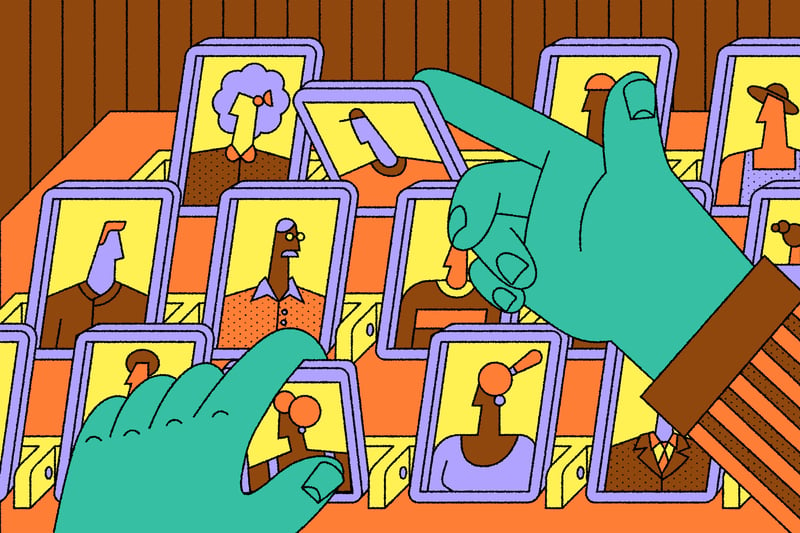
AI-generated composites are useful tools for marketers, but the nuances of actual humans are difficult to replicate.

A $3 trillion gap in 2008 grew to a $34 trillion gap in 2023. Economists found a secret ingredient.

Research explores how some entrepreneurs and inventors—like Thomas Edison and Arianna Huffington—become “person brands,” shaping entire industries.
Remote job postings demand more skills and experience than similar in-person positions, which could limit opportunities for early-career workers.
Sébastien Martin’s students use AI to learn, not cheat. In this episode of “Life, Automated,” he speaks about the potential and pitfalls of AI in the classroom.

How broadening your perspective, biding your time, and avoiding binaries can lead to a better solution for all parties.
… even though the economy is top of mind for the majority of U.S. voters.
U.S. exchanges are traditionally open only part of the day, but there’s now a push for round-the-clock trading. How will that change market activity?

Gamified learning tends to be viewed as either instructive or fun, but research shows how smart design choices can make room for both.


A highly consolidated market where insurers prioritize healthy patients may be undermining benefits for everyone.

It’s about people management and change management, not just buying tech and tools.

What can ancient Mesopotamia, the Great Depression, and the assassination of President McKinley tell us about modern politics and business?

Changing priorities are putting pressure on the effective delivery of aid to vulnerable populations.
The most-useful reviews don’t always come from those who have the most experience with a product.
Scientists who use AI to draft research proposals are earning more money, but their ideas may be less likely to move the field forward.

AI can build the plan. Humans still have to make it happen.
Corporate leaders including Jamie Dimon shared their concerns and strategies at the Kellogg Leadership and Governance Conference.
It’s not enough to “do well by doing good.” Mission-driven startups need to show that they are balancing profit and purpose.

A study of intelligence analysts shows that just 30 minutes of training can improve people’s ability to distinguish real images from fake ones.

An algorithm that bypasses a step in hospital triage has shown to be significantly more efficient.

Kellogg faculty offer research-backed advice on how to foster an ethical work culture.
Hear an episode of the new podcast by Kellogg’s Ryan Institute on Complexity, “Life Automated”—an exploration of how AI is changing our modern world.
The addition of a specialized role—obstetric nurse—improved hospitals’ ability to pair patients with the right providers.

Too many advantages can become a disadvantage.