Featured Faculty
McCormick Foundation Chair of Technology; Clinical Professor of Marketing; Director of the Center for Research in Technology & Innovation
Senior Fellow and Adjunct Professor of Marketing
Lisa Röper
Editor’s note: This is part of a series of articles based on Kellogg Executive Education webinars focused on COVID-19.
When the pandemic abruptly threw life into disarray, many companies went into triage mode to adapt. But customers have started getting used to these adaptations—virtual meetings, touchless interactions—even preferring them in many cases. Which means, according to Sanjay Khosla and Mohan Sawhney, if companies are treating this period as a short-term adjustment, they’re likely setting themselves up to fail.
Each Thursday, Kellogg faculty are offering free webinars on how COVID-19 is impacting businesses, markets, and careers. You can sign up for upcoming sessions, hosted by Kellogg Executive Education, here.
“Many companies believe that once COVID finishes, life will go back to normal,” explains Khosla, an adjunct professor of marketing at Kellogg. “This will not happen. So the question is: How do you reimagine your business?”
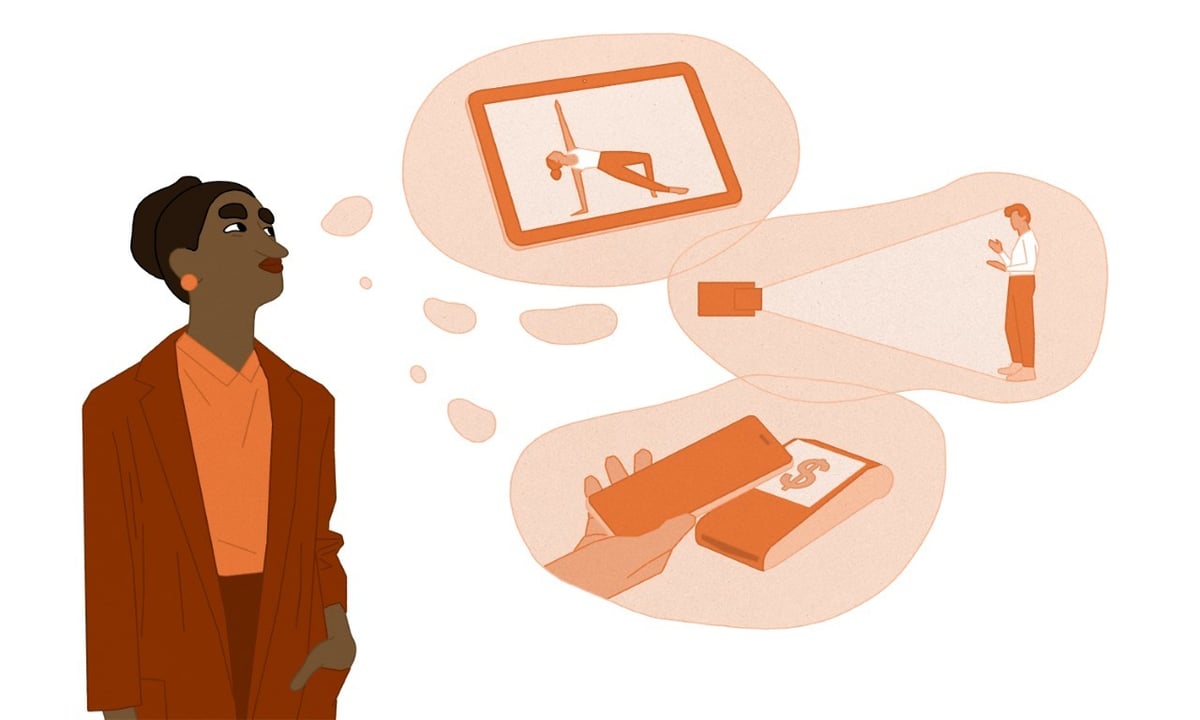
Take, for example, Sawhney’s personal trainer. Sawhney, a clinical professor of marketing at Kellogg, used to meet him at the gym. Now his trainer emails him workouts and they meet once a week over Zoom. But, instead of this being a crisis for the trainer, who is charging less than he used to, Sawhney has urged him to turn it into an opportunity. Now that he’s no longer bound by geography, the trainer can start working with clients thousands of miles away.
“I pay him less, but he can scale this,” says Sawhney, who is also Kellogg’s associate dean for digital innovation.
Khosla and Sawhney discussed how businesses of all types can view this crisis as an opportunity during a recent webinar from Kellogg Executive Education. They propose a three-step process for businesses that want to meet the moment: dream, learn, do.
The first step, dream, means coming up with concrete goals for the short, medium, and long term. They recommend doing this in a “discovery workshop.” This involves convening a multifunctional team that can jointly create these new goals instead of a top-down approach from leadership.
Khosla pointed to the sleep- and lounge-wear company Eberjey, with whom he’s worked as an executive coach and advisor. Pre-pandemic, only 25 percent of their sales were online. But the goal that emerged from Eberjey’s discovery workshop was to double that in three months.
In fact, they ended up surpassing that with 250 percent growth. And, Khosla says, “what was particularly exciting is that the team came together as one team, one dream, one plan.”
The next step, learn, means looking at what is working both within and outside your company.
Sawhney gave the example of the Indian telecom company, Jio, on whose board he serves. Jio customers generally head to small stores to activate their devices and prepay for services. But that was not possible during lockdown.
So Jio looked at a strategy that Amazon has adopted in India, where entrepreneurs set up small kiosks and get paid in cash to help people buy via Amazon’s website.
With this Amazon model in mind, Jio turned to the final portion of the process: do. Within six weeks, Sawhney explains, it had enlisted 1 million “Jio associates” who, via a touchless app, can add money to people’s data plans and activate new phones, all within a small community, perhaps an associate’s apartment complex.
Khosla and Sawhney stress that the bulk of a company’s time—roughly 90 percent—should be spent on the final step of doing. “The idea,” Khosla says, “is to get it roughly right quickly, rather than precisely wrong.”
You can watch the full webinar here and see previous articles from this series here.