Featured Faculty
Operations Nov 1, 2026
When Bundling Hurts the Bottom Line
Offering customers package discounts can backfire when demand is high and supply is low.
Lisa Röper
Summary Bundling prices for goods and services, like a flight-hotel package, is a popular strategy for businesses to maximize their profits. But researchers found that traditional bundle pricing is actually not the most-profitable approach in settings of scarcity, when there’s high demand but insufficient inventory. In such cases, the better strategy is to sell each item separately, which lets the seller push prices higher since a buyer’s willingness to pay for one product is no longer weighed down by how little they value the other products in a bundle.
Lebron James versus Stephen Curry. Victor Wembanyama versus Luka Doncic.
When the biggest names in the National Basketball Association get together to compete in the league’s annual All-Star game, fans from all around the world flock to the chosen city. The popularity of the event opens a brief but tremendous window of opportunity, not just for the NBA but for many other kinds of companies as well.
An online travel agency like Expedia, for instance, might see customer searches for flights and hotels near the venue skyrocket around that time. The rule of thumb has long been that, in order to maximize profits, companies should bundle their products—like a flight–hotel package deal in Expedia’s case.
But Tarek Abdallah, an associate professor of operations at the Kellogg School, and Josh Reed of NYU identified a hole in this traditional take on bundle pricing. They developed a mathematical model to study how the effectiveness of bundling changes when there’s a sudden rise in demand but insufficient inventory—the precise scenario that tends to take shape whenever the NBA’s All-Star game comes around.
They uncovered that traditional bundling is actually not the most-profitable approach in this setting of “scarcity.” Rather than benefitting the seller, bundling can end up benefitting the customer instead, which is the opposite of what economic theory has long advocated. It turns out that the most-profitable pricing strategy for sellers in this situation is not to bundle their high-demand products but to price and sell each one as individual items.
“If I have limited inventory relative to potential demand, the best thing to do is to just sell each item separately and not offer any bundles,” Abdallah says.
Breaking with tradition
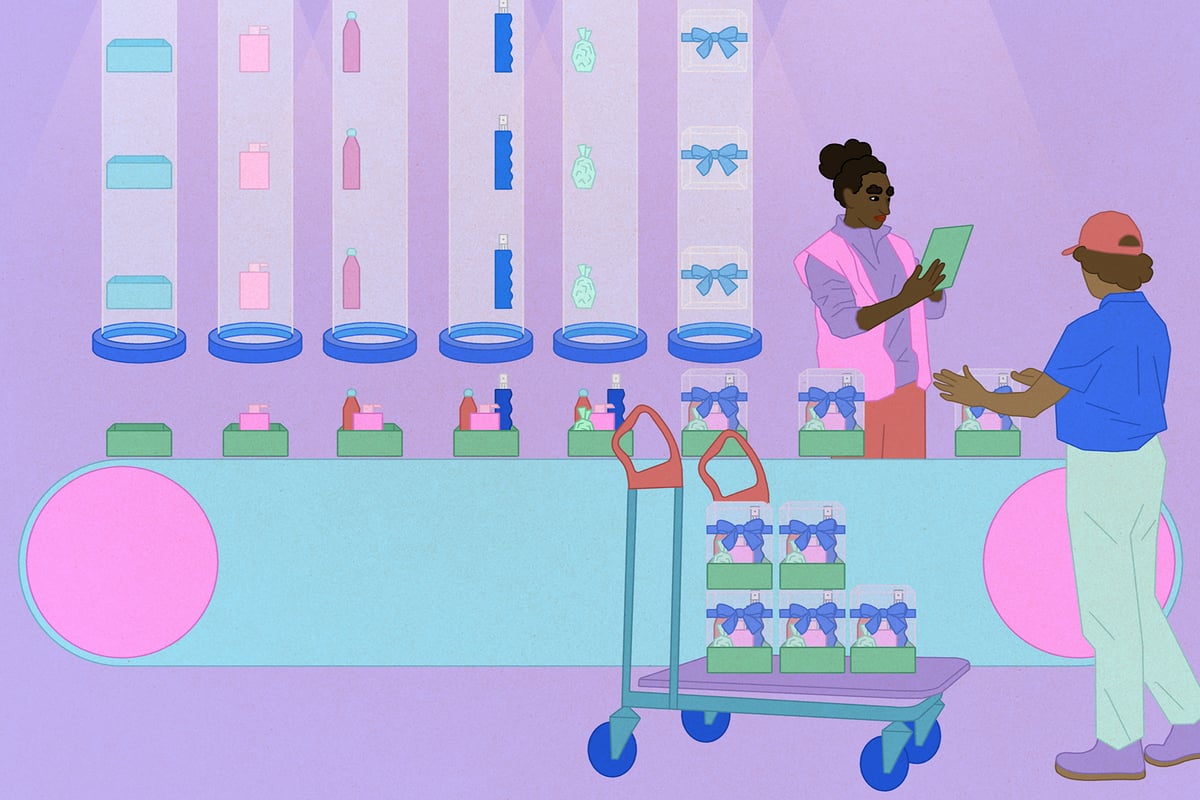
To understand why bundling becomes less effective under scarcity, the researchers compare four ways of pricing multiple products.
- First, there’s “component pricing,” an a la carte style where each product is priced individually, and the price of any bundle is simply the sum of the individual items.
- On the opposite end of the spectrum is “pure bundling,” where sellers only offer their products in a single, all-inclusive bundle.
- Then there’s “bundle-size pricing,” which sets the price of a bundle based on the number of items it contains rather than on the types of products in the bundle.
- And finally, “mixed bundling” offers every possible combination of items at distinct prices.
Mixed bundling is the most general of the four strategies and a benchmark for the optimal pricing strategy. By choosing prices appropriately, a seller using mixed bundling can reproduce the other approaches. But that flexibility also makes mixed bundling difficult to analyze and implement because of the massive number of possible combinations as the number of products grows.
In a perfect world with endless inventory, companies don’t need complicated bundling strategies to earn more than they would by selling products separately. Even pure bundling and bundle-size pricing can deliver that advantage. “Bundled deals allow the seller to squeeze more profit than selling the products separately,” Abdallah explains.
“When inventory is scarce, I don’t need a price that appeals to a broad customer base.”
—
Tarek Abdallah
But more often than not, the real world is less than ideal; product supply is finite, and businesses regularly face demand that far outpaces their inventory. While past research offers plenty of reasons why it’s good to bundle when supply is abundant, businesses short on inventory have far fewer answers.
That challenge motivated the researchers “to break from classical methods and come up with our own framework to think about how dynamic bundle pricing works when you have high levels of scarcity,” Abdallah says.
A reversal across the board
So Abdallah and Reed developed a model to understand why the golden rule of bundling falls apart under scarcity. They analyzed the most-flexible strategy, mixed bundling, to see what the optimal dynamic pricing policy looks like under scarcity—or when demand is high and inventory is low. Despite all the combinations a seller could offer, the answer is surprisingly simple: pricing each product separately brings in nearly as much revenue as the optimal mixed-bundling policy.
When a company has abundant inventory, bundling products helps smooth out customers’ high and low valuations for different products by compelling them to buy multiple products together at an averaged-out price. This creates a relatively stable middle ground for the company’s prices, leading to more-steady revenue from a broader customer base.
In contrast, when a company’s inventory falls far short of demand for a particular product, it faces a fundamentally different challenge. There are so many buyers chasing too few products that the company no longer needs to win over the broad market. What matters now is maximizing how much it can earn.
“When inventory is scarce, I don’t need a price that appeals to a broad customer base,” Abdallah explains. “I have to be more selective, and that means raising prices.” But that alone doesn’t settle the question of how to sell the products. “I can raise the price of the bundle, too,” he says. “So why should I make more money selling the products separately?”
The answer lies in the same averaging effect that makes bundling so effective when inventory is abundant. The customer willing to pay the most for one product doesn’t need to be the customer willing to pay the most for another. Each may value one item highly but the others much less. Bundling averages those valuations together, making it less likely to find people very willing to pay high prices for the products. This, in turn, limits how high the seller can raise the bundle price if they want to sell out.
On the other hand, pricing products separately lets the seller push prices higher since a buyer’s willingness to pay for one product is no longer weighed down by how little they value the other products.
While the theory’s predictions are sharpest at high levels of scarcity, Abdallah and Reed demonstrate that bundling can lose its advantage well before inventory becomes so constrained. Their analysis shows that selling products separately can overtake pure bundling when a product’s available inventory divided by the number of potential customers falls below about 30 percent to 60 percent, depending on the setting. When sellers see that their inventory-to-market-size ratio drops to this range, it gives them a “practical trigger to pull constrained items out of bundles and sell them separately or as premium add-ons,” Abdallah says. “It therefore moves the decision-making beyond intuition.”
In addition, when sellers add more products to a bundle, they only accentuate the downside of bundling.
“Our results say when you have limited inventory, bundling favors the customer,” Abdallah says, “whereas component pricing or a la carte pricing favors the seller because that’s the optimal thing for the seller to do in order to extract all the surplus.”
Put another way, under scarcity, companies that offer traditional bundling are leaving a lot of money on the table. “It’s pretty much a reversal on every dimension,” he says.
Simple organizing principles
The findings are a reminder of just how critical it is for businesses to align their strategy and marketing decisions with their operations, including their inventory and demand.
A company like Netflix, for example, offers an all-in-one subscription plan for its movies and shows. A lot of tech startups have tried to replicate Netflix’s success by offering a similar kind of bundle for their products. What some fail to fully appreciate is that Netflix operates in a digital market with abundant inventory. When a customer views one show, it does not reduce what is available to anyone else. Trying to copy Netflix’s approach can spell trouble for these other companies when they run into problems with inventory.
“When you want to bring the lessons of Netflix to a startup that has to deal with limited inventory, you have to be extremely careful,” Abdallah says. “Inventory changes the story.”
On the other hand, many companies, especially those in the events industry, have come to understand this lesson over time, demonstrating a high level of skill in the art of bundling and unbundling their products. “We hope this research makes that lesson clear and gives it a rigorous foundation,” Abdallah says.
When he was looking up the price of tickets for the NBA All-Star game in Chicago in early 2020, for instance, Abdallah noticed that Orbitz did not advertise bundles for flights and hotels in the city before the game. But it did for those same flights and hotels immediately after the event.
“This is what companies do for the Super Bowl, for shows that are high demand like Hamilton,” he says. “Companies know how to protect their inventory.”
The researchers’ theoretical modeling now provides these companies with analytical evidence to back their approach, along with “simple organizing principles” Abdallah says can help them decide which products they should continue to bundle and which they should not.
About the Writer
Abraham Kim is the senior research editor of Kellogg Insight.
About the Research
Abdallah, Tarek, and Josh Reed. 2026. “The Diminishing Value of Bundling Under Inventory Scarcity.” Management Science.
Insight in your inbox
Receive our newsletters to keep up with the latest research and ideas from faculty at the Kellogg School of Management.
This website uses cookies and similar technologies to analyze and optimize site usage. By continuing to use our websites, you consent to this. For more information, please read our Privacy Statement.