Featured Faculty
Clinical Professor of Strategy; Director of Entrepreneurship Programs at Kellogg; Faculty Director of the Zell Fellows Program; Director of the Levy Institute for Entrepreneurial Practice
Lisa Röper
The pattern is familiar: a new digital system arrives, everyone gets trained, and adoption is expected to follow. But instead of embracing the change, people find ways around it. Technology works, but humans don’t move.
This pattern repeats even when the new system is clearly superior. The clues are in people’s reactions: the sales leader who has seen past changes come and go stays silent, the operations lead hesitates after weighing the impact on her team, and employees resist because they don’t see a reason to change how they work.
The software was never the problem. Moving the humans was the problem. It always is.
The story is the same across settings.
I’ve seen this pattern firsthand in my work as a professor of innovation and entrepreneurship at the Kellogg School of Management, a consultant to businesses across industries, and an investor in founders building companies from the ground up. The context changes, but the challenge remains the same—from multibillion-dollar corporations to five-person startups.
The technology usually works. What slows progress is when a better idea meets people who aren’t ready or willing to change.
This is especially critical to understand as companies now spend trillions of dollars a year trying to transform themselves digitally. Most of it disappoints them.
Boston Consulting Group found that 70 percent of digital transformations fall short of their objectives. The reason is the organization, the culture, the deeply rooted behaviors that resist the change.
Changing those behaviors requires “soft” skills, which are some of the hardest capabilities to get right.
For decades, organizations have labeled the ability to move people as a “soft” skill.
Finance, engineering, accounting, and analytics were treated as the serious, technical disciplines, while leadership, persuasion, and influence were often viewed as secondary skills learned along the way. But failed transformations have repeatedly revealed the opposite: the technical components rarely break down—the human ones do.
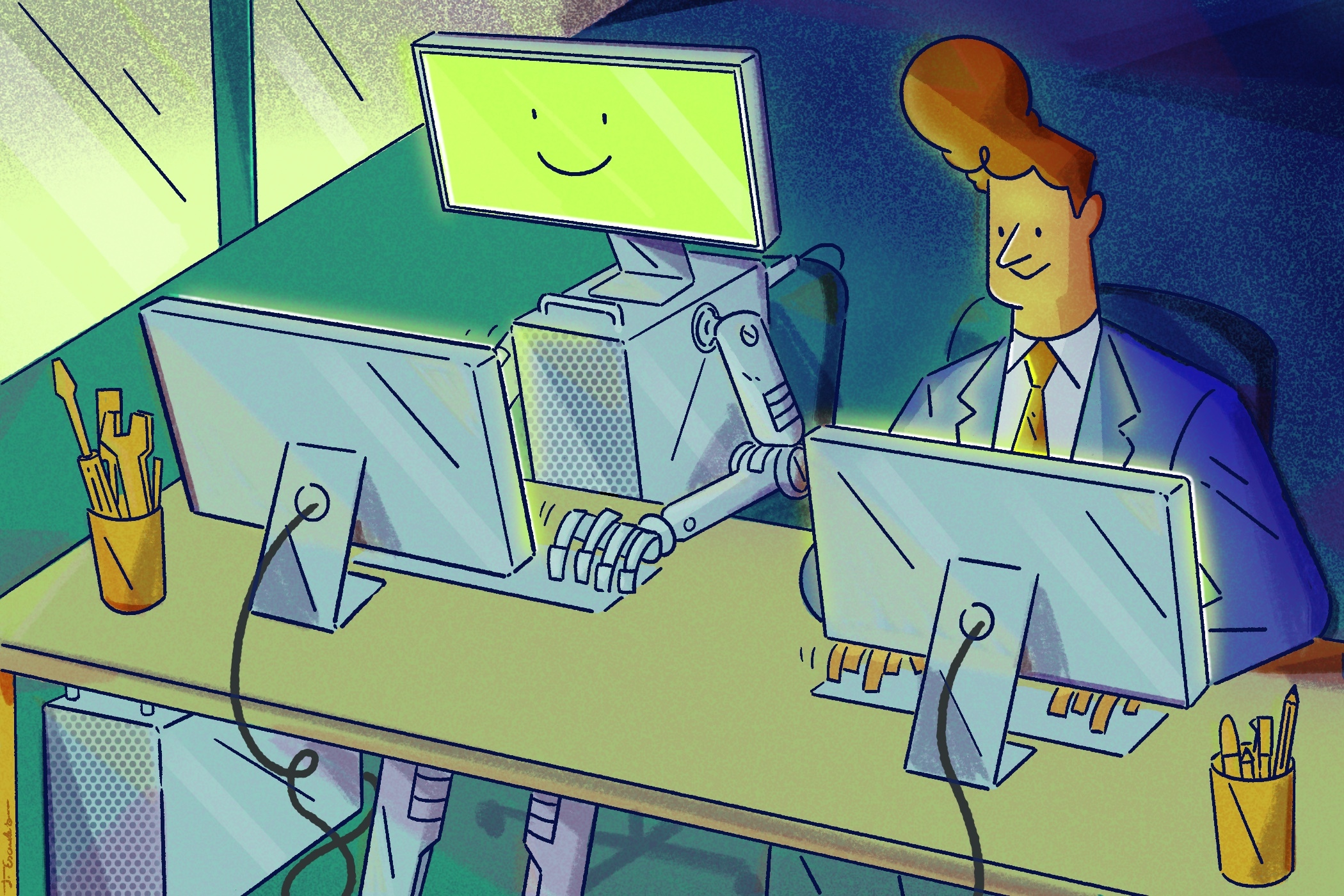
AI is exposing a fundamental shift: the skills once considered “hard” are increasingly the ones machines do best. AI can build models, analyze data, and create plans faster than any person. But it cannot navigate the human side of change—understanding resistance, aligning incentives, and getting people to move.
The technology usually works. What slows progress is when a better idea meets people who aren’t ready or willing to change.
—
David Schonthal
As AI makes ideas easier to generate, the competitive advantage shifts to the ability to make those ideas happen.
But the current wave of “soft skills matter more now” commentary still treats these skills as intangible, a matter of charisma or emotional intelligence or being a natural “people person.” That framing is why we called them soft in the first place, and it’s wrong.
The skills aren’t soft. They’re just badly named. Underneath the skills that actually move people, there is a mechanism. The mechanism is as legible as a balance sheet.
That people-moving mechanism is the core of a framework my Kellogg colleague Loran Nordgren and I developed, called Friction Theory. The instinct, when you want to move someone, is to push.
You add fuel, a better argument, a bigger incentive, a slicker demo. But every attempt to change behavior also generates friction, a set of forces that resist the change and stay invisible to the person doing the pushing. There are four types of friction.
That’s why resistance is so common—four forces push against change, including the system rollouts mentioned earlier. The person who can break through it is not more charismatic than you. They’re doing a different kind of analysis, reading which forces are holding the group in place, and lowering them before spending a dollar on pushing.
It’s what a great salesperson does to close a reluctant customer, what a founder does to convince their first hire to leave a safer job, what anyone is doing to get a wary investor onboard. Not charm. The diagnosis and removal of friction.
Reducing friction is not about having a certain personality or natural ability. It is a skill that can be learned and applied.
Leaders can reduce inertia by connecting new ideas to familiar behaviors, lower effort by removing unnecessary barriers, address emotional concerns by understanding what people stand to lose, and reduce resistance by involving people in shaping the change.
These are not soft skills. They are structured, measurable capabilities that require analysis, precision, and practice. As AI makes technical expertise easier to access, the ability to understand people and turn ideas into action will become an even greater advantage.
The point is not that soft skills are suddenly becoming important. It is that they were mislabeled all along.
The hardest challenge in business was never just solving the problem. It was getting people to embrace the solution.
*
This article originally appeared in Inc.