Featured Faculty
Marketing Artificial Intelligence Oct 1, 2026
What AI “Synth Personas” Can and Can’t Reveal About Real Customers
AI-generated composites are useful tools for marketers, but the nuances of actual humans are difficult to replicate.
Riley Mann
Summary Marketers are creating “synth personas,” or AI-produced customer composites that can be used to test how real customers may respond to new products and services. Consumer anthropologist and Kellogg professor Gina Fong describes how synth personas can be useful—and where their limitations lie. She recommends utilizing them in the research and rehearsal stages, before interacting directly with human customers, who offer more-nuanced information about product usage and motivations.
Market research is hard. Gathering data in the field, conducting focus groups, and executing test campaigns takes time and money. To simplify this process, many companies are turning to a new alternative: synth personas, generated with AI.
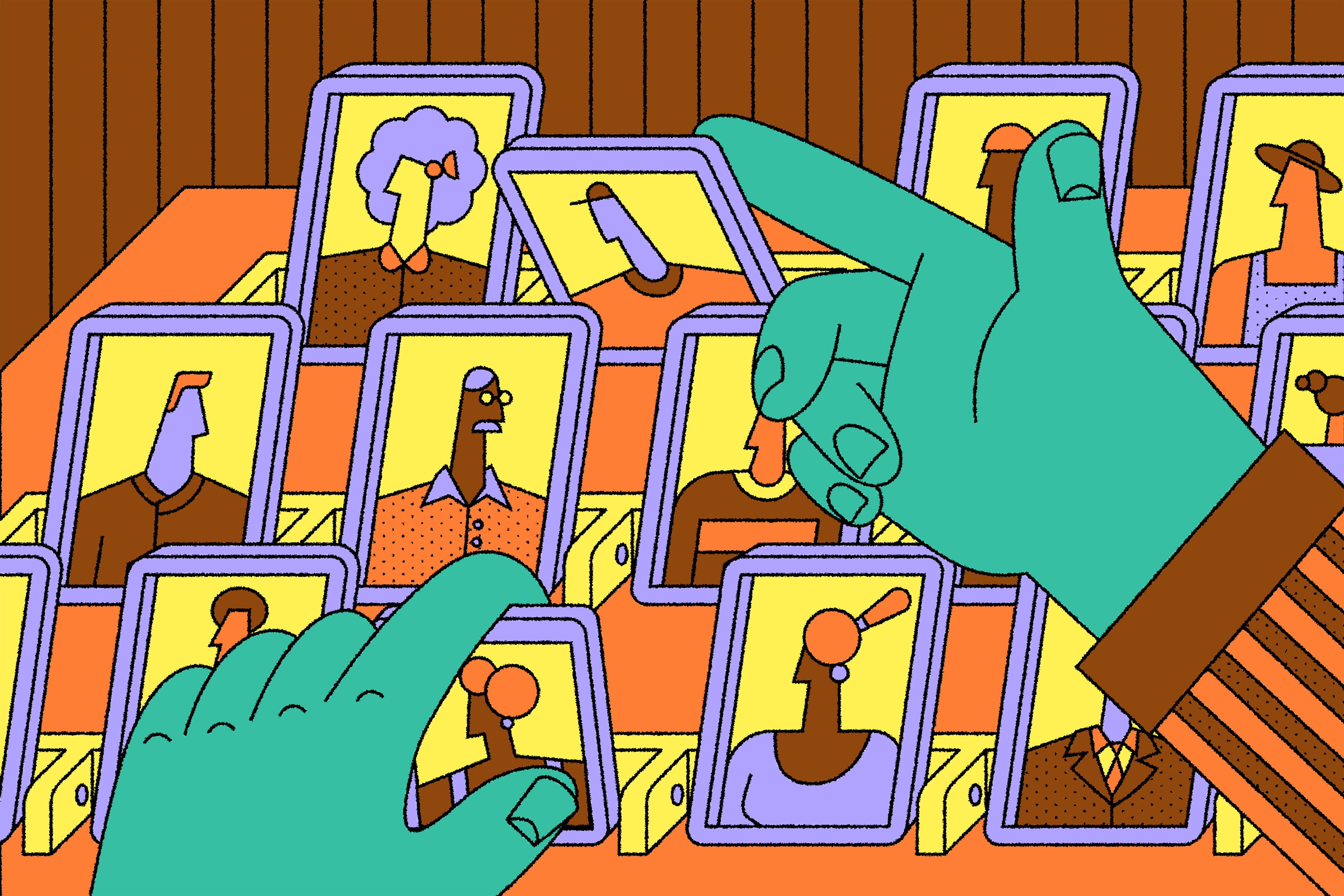
Built from large amounts of customer data, these composite characters promise to help marketers predict how consumers will respond to new products, services, and marketing campaigns. Instead of recruiting a subject pool of new moms or gamer teens, consumer researchers can simply ask an AI model to role-play the demographic.
For decades, marketers have used personas to aggregate the people they’re trying to reach, grouping customers with similar behaviors, motivations, and needs into easy-to-understand profiles. Synth personas do the same thing—but use AI to build them.
Gina Fong, a consumer anthropologist and clinical assistant professor of marketing at the Kellogg School, says these personas can be useful. But businesses shouldn’t mistake the insights they glean from synth personas for the kinds of information real people can provide.
Yet it’s easy to see why they’re gaining in appeal. Companies developing synth personas promise a faster, cheaper, more-efficient alternative to traditional consumer research, with some claiming they can mimic human responses with around 85 percent accuracy.
Fong’s point isn’t that these tools don’t work. It’s that they’re being used for jobs they were never designed to do.
“They’re a handy research tool when you’re preparing and exploring,” Fong says, “but they are much less effective at capturing the nuance, emotion, empathy, and unpredictability that real people offer.”
Fong offers advice on the use cases where synth personas genuinely add value—and where marketers should still rely on getting out and talking to real people.
Prepare with synth personas
Synth personas work best when they are not trying to replace consumer research but to strengthen it. They can help researchers prepare interviews by identifying blind spots in their lines of questioning and building confidence before meeting with real people.
“You may have a general idea of what you want to achieve in a real ethnographic human interview,” Fong says. “Using a synth persona to practice can help hone that interview. But it would be a mistake to expect those personas to replace the people you hope to understand.”
During the Covid home-improvement boom, Fong worked with a company that was interested in entering the DIY market. In this instance, synth personas would have been a useful way for Fong to better understand the behaviors and motivations of DIY enthusiasts before spending time with customers in their homes.
“Synth personas are an especially useful way to get up to speed in an unfamiliar category and get ideas flowing,” she says.
In the DIY market, Fong would have started by asking simple questions: What does it mean to be a DIYer? How can you spot another DIYer? How do DIYers share information and expertise with each other?
But those answers would only be just that: a starting point. The answers wouldn’t replace talking to customers, but they might help shape the conversation.
“I would really want to go to someone’s house,” Fong says. “I’d want to see their workshop, their tool shed, their tool belt, what kind of projects they’ve done in their house, and which ones they’re most proud of. That’s going to be different for every person who does DIY home improvement.”
Talk to real people
Real people still tell you key things synth personas can’t, revealing the details and motivations that AI all too often smooths away. Synth personas can build a composite picture of your customers, but they can’t capture the individual quirks and contradictions that actually make them human.
“When you’re using synth personas, you don’t get any of the messiness that being human entails,” Fong says. “Everything is rounded; nothing is sharp; nothing is contrasted. It’s just, to me, a different experience. They don’t really give you the full picture.”
The strongest consumer research doesn’t force a choice between AI and people. It uses both. Synth personas are most useful for gathering information and testing before the in-person research begins. They help researchers arrive better prepared, with sharper questions and a clearer sense of the goals their research is trying to achieve.
“Synth personas are an especially useful way to get up to speed in an unfamiliar category and get ideas flowing.”
—
Gina Fong
Fong recalls an in-person meeting with DIY enthusiasts who took enormous pride in their tools. One participant owned multiple glue guns, each designed for a different task. Another joked she needed a holster because she carried her glue gun everywhere.
“I don’t know if a synth could really express how exciting a glue gun is,” Fong says, “or how much these folks identified with theirs.”
Environment matters
Interacting with synth personas also doesn’t allow marketers to gather environmental details that may inform the bigger picture about a customer’s relationship to a product. Details about where people live, whom they live with, and how they actually use products often reveal the details that matter the most.
“Even when you’re conducting an ethnography with a real person online, you only see what is on the screen that they’re showing you,” Fong says. “If I’m conducting an in-person interview for a cleaning product, I can walk through their living room, their dining room, maybe even a family room, and get a sense of consistency of how they’re cleaning their home that just is missing when I’m doing an online ethnography or working with a synth persona.”
This added context can motivate designers to improve their products. One stark example of this was when Fong was conducting an in-person interview of an elderly woman to learn about how she used her printer. Fong watched her struggle to connect a printer to her computer.
“You see she’s crawling around because she wants to print out a photo of her grandchild,” says Fong. “No one wants to see a grandmother underneath a desk trying to figure this out. Being there in person and seeing this lit a fire under the engineers to make the printer easier to use.”
The emotional details
Large language models can be pretty good at getting into character—up to a point. Ask it to play a role, and it will modify its responses to try and represent a particular demographic. But an AI model, by design, is drawn to safe and pleasant responses, not the impulsive and emotional reactions researchers often get in the field.
Fong cites experience testing a new pasta alternative that promised healthier nutrition without sacrificing taste. Parents were enthusiastic, but seeing how the kids reacted was more informative: “this stuff is slimy and gross!”
On the positive side, observing parents and children build a new STEM kit together provided important data that went deeper than interview responses. When the test subjects leaned closer together and stayed focused on the project, that body language sent subconscious positive feedback about the product that would be hard to express in words.
“Working directly with people provides an empathy-fueled connection that can lead to deeper insights and greater conviction about the research and its topic of focus,” Fong says. “It will be a long time before a synth persona can provide the same experience, if ever.”
All told, synth personas are a valuable new tool in the marketer’s arsenal. But supporting those AI insights with research in the real world is still worth the extra effort, Fong says.
“Observing real people in real life is the only way to get the comprehensive view of a product or idea in action, with the full, often messy set of behaviors, emotions, and responses that make us human in the first place.”
About the Writer
Seb Murray is a writer based in London.
Insight in your inbox
Receive our newsletters to keep up with the latest research and ideas from faculty at the Kellogg School of Management.
This website uses cookies and similar technologies to analyze and optimize site usage. By continuing to use our websites, you consent to this. For more information, please read our Privacy Statement.