Featured Faculty
Marketing Mar 1, 2026
Cashing In on Cute
Marketers, take note: there’s a strong connection between one’s political leanings and a preference for “cute” product aesthetics.
Michael Meier
Summary Companies occasionally give their products or packaging a cute aesthetic—childlike features such as a rounded face, larger eyes, round cheeks—to increase consumer appeal. In a series of studies across thousands of participants in the U.S., UK, and India, researchers found that political conservatives were more likely than political liberals not only to like these cute products but to buy them as well. One of the main reasons driving this behavior was the way conservatives associated cuteness with their core values of innocence and bodily purity.
Cuteness is having a moment in the marketplace.
The fervor around cute products has spread well beyond children’s plush toys like Labubu and Squishmallow to cell-phone cases and even credit-card designs. And countless companies are leveraging this cute aesthetic—either in the product itself or its packaging—to increase consumer appeal.
“In marketing research, we have mostly focused on the consequences of the cute aesthetic”—whether a product design with cute versus plain imagery will get more people to buy the product, says Chethana Achar, a Kellogg associate professor of marketing.
But Achar and her colleague, Carolyn Wells Keller, a Kellogg alumna who is now a lecturer at Northwestern’s Medill School, wanted to explore if consumer preferences for cute products are influenced by individual differences between consumers.
“Research on moral intuition and moral foundations suggests that people who endorse politically conservative beliefs, compared with those with more-liberal views, prioritize values related to bodily purity and sanctity,” Achar says.
Building upon this research, Achar and Keller conducted a series of studies across thousands of participants in the U.S., UK, and India to better understand how someone’s political ideology might influence their response to the cute aesthetic.
They confirmed that political conservatives were more likely than political liberals not only to like cute products but to buy them as well. One of the main reasons driving this behavior, they found, was the way conservatives associated cuteness with core values such as innocence and bodily purity.
“If you’re more politically conservative, you’re drawn to this childlike-cuteness aesthetic because of its moral congruence with valuing bodily purity,” Achar says.
Cuteness and purity
For their study, Achar and Keller focused on a specific meaning of “cute.”
“Cuteness in this case means childlike features: rounded face, larger eyes, round cheeks,” Achar says. That’s in contrast to a more whimsical type of cuteness, like stylized imagery of polka dots or clouds, or “things that evoke a capricious feeling.”
In one of their experiments, the researchers showed 868 participants a gift card that featured one of three designs: a smiling baby with large eyes and a round body (a cute design), polka dots in saturated colors (a whimsical design), or a white background (a plain design).
“If you’re more politically conservative, you’re drawn to this childlike-cuteness aesthetic because of its moral congruence with valuing bodily purity.”
—
Chethana Achar
They found that political conservatives were more likely than liberals to be interested in the card with the childlike cute design, but not the whimsical cute design, and more likely to say they would buy it. Conservatives were also more likely to agree that the cute design, but not the other designs, appeared innocent and childlike.
Similar findings emerged when the team conducted follow-up studies using different types of products—such as a water bottle, laptop, and sticker—as well as for people in various countries, including the U.S., UK, and India. “It’s a very cross-cultural effect,” Achar says.
The pattern held when looking at consumer search behavior, too. The researchers examined Google searches for a wide range of products over a yearlong period and discovered that people were more likely to be interested in “cute” products—based on how frequently they included the term in their searches—in U.S. states where a higher proportion of conservatives resided.
Moral foundations
Achar and Keller’s research stems from well-established studies and theories related to people’s morals.
“The theory is that we all have several big moral foundations—such as fairness or purity—and researchers have mapped different ideologies onto those foundations,” Achar says.
For example, research has shown there is a stronger connection between liberal ideology and fairness, and a stronger connection between conservative ideology and purity.
That context helps explain why Achar and Keller repeatedly found that conservatives preferred cute products—since they associated the cute aesthetic with purity and innocence. The researchers even found that aesthetic preferences were aligned with people’s stance on specific issues. In one study, for instance, people who were anti abortion or anti same-sex marriage—stances that have traditionally been tied to sexual purity—were more likely to prefer cute products than those with opposing views.
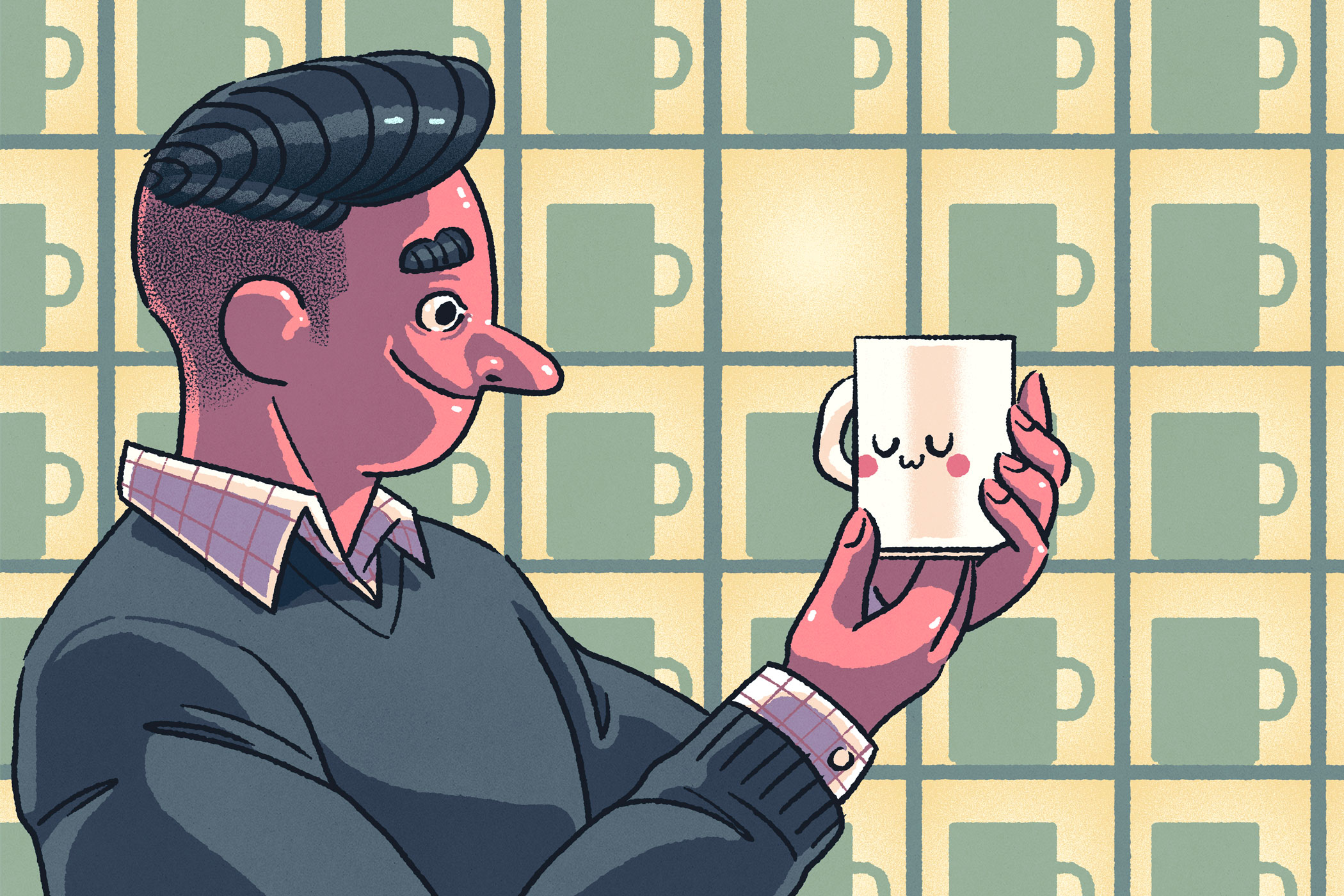
Conversely, the association broke when a product itself was associated with impurity or promiscuity. In one study, for example, the researchers assessed people’s responses to two different products with a childlike-cute design: a mug and a condom. Conservatives were more interested in the cute mug than liberals were, as expected, but conservatives were not more interested in the condom.
“If a product is associated with (perceived) promiscuity, then the childlike-cuteness aesthetic is no longer morally congruent, and we don’t see the effect,” Achar says. “It gets turned off because the product itself is considered impure from a bodily purity perspective.”
Marketing with cuteness
What lessons can business and marketing leaders take from these findings?
For one, there’s a strong connection between values and aesthetics for a product or branding. “Ideological values have typically been associated with things like activism, voting, and donations—prosocial things,” Achar says. “Our work shows that values have a connection to even visual aspects of consumption. If something as simple as a mug, which has a pretty clear, consistent function, is visually more consistent with your values, then it would be more attractive to you.”
That reality has clear implications for how companies and marketers can use aesthetics to strategically market their products or ideas to different audiences. All too often, ideology-focused marketing tactics amount to preaching to the choir.
As Achar points out, “Before our research, we looked at a lot of anti-abortion campaigns, and many were leaning toward a childlike-cuteness aesthetic, targeting politically conservative people” who already likely favored such policies.
But the research results suggest that campaigns might be able to get more bang for their buck by, instead, targeting a group that does not naturally gravitate toward their products or offerings using an aesthetic that appeals to that group’s values.
“Imagine a marketing manager wants to promote a green, sustainable product and talk across the aisle to political conservatives,” Achar says. “Using a childlike-cuteness aesthetic should be more effective than a neutral aesthetic.”
About the Writer
Sachin Waikar is a freelance writer based in Evanston, Illinois.
About the Research
Keller, Carolyn W., and Chethana Achar. 2025. “Conservatives’ Preference for Kinderschema Cute Products: Value Congruence in Evaluations of Product Aesthetics.” Journal of the Academy of Marketing Science.
Insight in your inbox
Receive our newsletters to keep up with the latest research and ideas from faculty at the Kellogg School of Management.
This website uses cookies and similar technologies to analyze and optimize site usage. By continuing to use our websites, you consent to this. For more information, please read our Privacy Statement.