Human Behavior

January 1, 2026
When It Comes to Creativity, AI Doesn’t Always Have the Answer
A classroom experiment shows why you shouldn’t short-circuit the brainstorming process.
Brian Uzzi

January 1, 2026
How to Set the Most Effective New Year’s Resolutions
It’s time to think about what you want to do, try, and change in 2026. Here’s a plan for making your resolutions a success.
Harry M. Kraemer

December 5, 2025
3 Tips for Ethical Decision-Making
As a leader, you often have to make morally complex choices. Here’s how to do so when there’s no single right answer.
Brooke Vuckovic
December 1, 2025
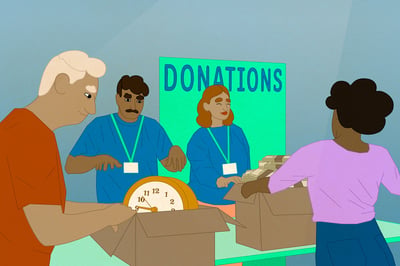
When It Comes to Giving, People Value Time over Money
Monetary donations are generally more helpful for charities. So why do people prefer to donate their time instead?
Samantha Kassirer and Rima Touré-Tillery

December 1, 2025
Can Email Reminders Help Fix the Savings Crisis?
A megastudy finds that a simple nudge can make a meaningful difference.
Katherine Milkman, Sean Ellis, Dean Karlan and and coauthors

December 1, 2025
Houston, We Have a Solution
Kellogg researchers reveal a set of best practices—based on simulated missions to Mars—to keep teams working together effectively.
Noshir Contractor and Leslie DeChurch
November 24, 2025
Podcast: I Respectfully Disagree
From ketchup on hot dogs to politics, it can be hard to talk constructively about polarizing issues. On this episode of The Insightful Leader, we play a game to recognize the traps we often fall into and learn how to avoid them.
Steven Franconeri

November 4, 2025
What Does It Mean to Be Rational?
It’s more than just being logical and analytical, research shows. But misperceptions can affect how people are treated and how much they are paid.
Charles Dorison and Tessa Charlesworth

October 17, 2025
Agree to Disagree? 5 Tips to Cool Down a Heated Argument.
A new game helps people find common ground on divisive issues. But you don’t need to play to practice its principles.
Steven Franconeri
October 1, 2025
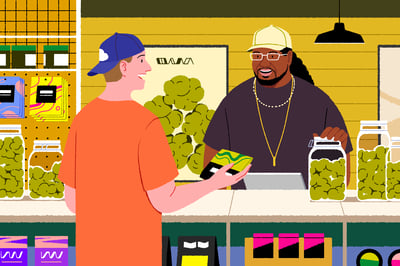
In the Legalized Drug Industry, Stereotypes May Drive Sales
Conventional wisdom says that minority-owned branding limits your audience. That’s not the case for cannabis and psychedelics.
Chethana Achar, Nidhi Agrawal and Keyaira Lock
October 1, 2025
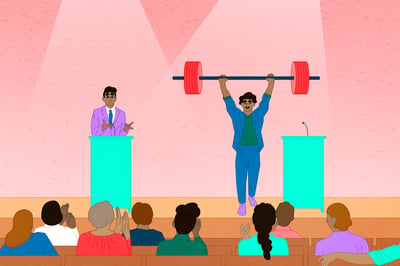
Strong-Arm Leaders Often Get the Minority Vote
A study of voter preferences in the U.S. and Europe—across a wide range of races, ethnicities, and political affiliations—reveals why.
Krishnan Nair, Marlon Mooijman and Maryam Kouchaki

September 1, 2025
Why Big Problems Can Feel Small
When people hear a problem is widespread, they are less likely to consider it serious—and less inclined to act.
Lauren Eskreis-Winkler, Troncoso Peres Luiza Tanoue and Ayelet Fishbach

July 1, 2025
Knock Knock. Who’s There? Generative AI.
Learning that a joke, a story, or art came from AI boosts our confidence in our creativity.
Taly Reich and Jacob D. Teeny

May 1, 2025
Meet Mr. Treadmill, Your Workout Buddy
Need some extra motivation to reach your fitness goals? Anthropomorphizing objects can help, new research shows.
Lili Wang and Rima Touré-Tillery
May 1, 2025
Do Gut Feelings Change Over Time?
New research challenges the long-held belief that unconscious attitudes are set in stone.
Tessa Charlesworth and and coauthors

April 11, 2025
Our Colleagues’ Decisions May Influence Us More Than We Realize
The effect of peer influence “raises some interesting and potentially troubling questions about the nature of expertise and decision-making.”
Jillian Chown and Carlos Inoue

April 1, 2025
Why That “Follow-Back” on Social Media Is Not Guaranteed
Regardless of their political ideology, people are less likely to follow back users from certain racial groups.
Krishnan Nair, Mohsen Mosleh and Maryam Kouchaki
March 4, 2025
Podcast: How Should You Present Yourself at Work?
Be yourself! No, not like that. On this (rerun) episode of The Insightful Leader, we help you navigate the competing advice about how much to share and hold back.
Ellen Taaffe and Derek D. Rucker
March 1, 2025
Does Satire Soften the Blow of Criticism?
Quite the opposite, in fact, even if it comes in the form of humorous memes, videos, or headlines.
Hooria Jazaieri and Derek D. Rucker

January 1, 2025
How a Weak Sense of Self Encourages Bad Behavior
“When people don’t know who they are, they think their moral actions don’t really reflect who they are.”
Jane Jiaqian Wang and Rima Touré-Tillery
Insight in your inbox
Receive our newsletters to keep up with the latest research and ideas from faculty at the Kellogg School of Management.
This website uses cookies and similar technologies to analyze and optimize site usage. By continuing to use our websites, you consent to this. For more information, please read our Privacy Statement.

The Insightful Leader
September 21, 2026 · 32:21 minutes
July 17, 2026 · 34:48 minutes